

- Our Services
- IVF (In Vitro Fertilization) Treatment in Cyprus
- Egg Donation in Cyprus
- Embryo Donation in Cyprus
- Sperm Donation in Cyprus
- Cyprus PGD Genetic Test
- Cytoplasm & Mitochondria Transfer in Cyprus
- Kıbrıs ICSI (Mikroenjeksiyon) Tedavisi
- Frozen Embryo Transfer (FET) in Cyprus
- Azoospermia Treatment in Cyprus
- Genetic Diagnosis in Cyprus IVF Treatment
- Infertility Treatment for Women in Cyprus
- Male Infertility (Sterility) Treatment in Cyprus
- Causes and Treatment of Miscarriage
- Infertility Tests in Cyprus
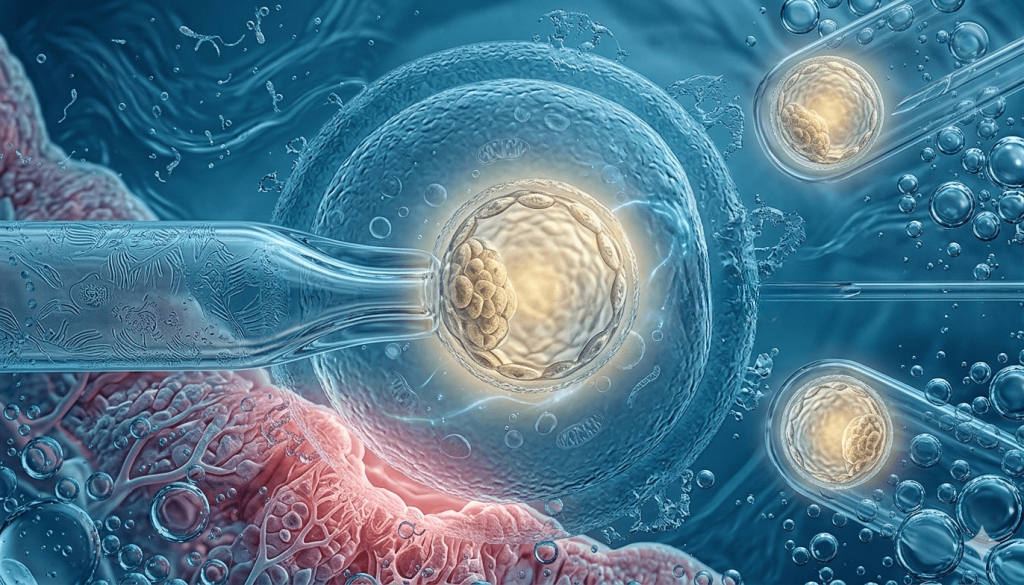
The process of freezing healthy embryos obtained during IVF treatments using advanced technological methods for future use and transferring them to the uterus at the right time is called FET (Frozen Embryo Transfer). Op. Dr. Emine Efendi maximizes your chances of pregnancy by preserving your embryos under the safest conditions in her clinic in Cyprus, at the moment when your body is most ready.
What is Frozen Embryo Transfer (FET)?
FET is the process where embryos left over from a fresh transfer in an IVF cycle, or held for reasons such as genetic screening (PGD/PGS), are stored using the vitrification (flash-freezing) technique and then thawed and placed into the uterus at a later period. This method allows embryos to be stored for years without compromising their quality.
Who is FET Suitable For?
Frozen embryo transfer is the ideal option in the following cases:
Surplus Embryos: If high-quality embryos remain after the first transfer.
OHSS Risk: If the uterus needs to be rested after egg retrieval.
Genetic Screening: If PGD/PGS is to be performed on the embryos (frozen until results are available).
Thin Uterine Lining: If the uterine lining (endometrium) is not at the desired thickness on the day of fresh transfer.
Desire for a Second Child: For couples who want to become parents again years later.
How is FET Treatment Performed in Cyprus?
The FET process is much simpler and requires less medication compared to fresh IVF treatment. The mother-to-be’s uterus is prepared with hormone supplements for embryo implantation. When the uterine lining reaches appropriate maturity during ultrasound monitoring, the frozen embryos are thawed and the transfer procedure is performed.
Differences Between Frozen Embryo Transfer and Fresh Transfer
In fresh transfer, the body is under intense hormonal influence due to egg stimulation drugs. In FET, the uterus is in a more “natural” and rested state. Research shows that in some cases, resting the uterus (the “Freeze-all” strategy) increases implantation rates. Additionally, FET does not involve the stress of egg retrieval (OPU).
FET Process and Steps in Cyprus
Preparation: Estrogen supplements are started on the 2nd or 3rd day of the menstrual cycle for uterine preparation.
Monitoring: After about 10-12 days, the thickness of the uterine lining is measured via ultrasound.
Progesterone Support: Once the uterine lining is ready, progesterone use begins.
Thawing and Transfer: The transfer is scheduled at a time appropriate to the day the embryos were frozen (Day 3 or Day 5).
FET Success Rates in Cyprus
Thanks to the vitrification technique used today, the survival rate of embryos after thawing is over 95%. Our advanced technological laboratory infrastructure in Cyprus ensures that frozen embryos yield pregnancy rates equivalent to, and sometimes even higher than, fresh embryos.
Advantages of FET Treatment in Cyprus
Less Stress: Since the egg retrieval procedure is not repeated, the process is psychologically and physically easier.
Economical: It is much more cost-effective than starting an IVF treatment from scratch.
Flexibility: The day of transfer can be adjusted according to the mother-to-be’s life schedule and body readiness.
Healthy Pregnancy: A uterine environment free from hormonal pressure is more comfortable for the embryo.
Points to Consider in FET Treatment
It is vital to use medications (patches, tablets, or gels) regularly at the times specified by the doctor before and after the transfer. Additionally, heavy exercise should be avoided after the transfer, but daily life should continue. Op. Dr. Emine Efendi monitors the process with personalized recommendations at every stage.
Frequently Asked Questions (FAQ)
Theoretically, embryos can be stored in liquid nitrogen (at -196 degrees) for decades without loss of quality.
Yes. Studies conducted on millions of FET births have proven that there is no increased risk regarding the health and development of these babies.
Uterine preparation can be done in your own city. Staying in Cyprus for a total of 2-3 days is sufficient for the day of transfer and 1-2 days of rest afterward.
No, the transfer procedure is no different from a normal gynecological examination and does not require anesthesia.
Do you have any questions about our treatment processes?
Under the guidance of Dr Emine Efendi, let’s work together to plan the most suitable treatment plan for you in the peaceful atmosphere of Kyrenia. A professional perspective on all the processes you’re curious about is just a message away.